



































🌹 Why Fall Is the Best Time to Plant Roses
If you’ve ever wondered whether to plant roses in spring or fall, here’s the truth from seasoned growers: fall is nature’s secret window for success. Warm soil, gentle rainfall, and cooler air temperatures create a low-stress environment that helps roses establish deep, resilient root systems. By the time spring arrives, these fall-planted roses wake with a head start — vigorous, balanced, and ready to bloom.

🌤 Why Fall Works So Well
1. Warm Soil, Active Roots
Even as the days shorten, the ground retains the warmth of summer. When soil temperatures linger between 50–65°F, root systems stay metabolically active. This means your roses can continue sending out feeder roots well into November in many climates — long after top growth slows. Planting in spring, by contrast, often means waiting for the soil to warm up before roots can really get started.
2. Natural Rainfall & Reduced Heat Stress
Autumn rainfall arrives just when young roses need it most. Combined with cooler air and softer sunlight, it reduces the risk of dehydration, leaf scorch, and transplant shock. Fewer pests and fungal spores are active as well, giving new plantings a peaceful start to life underground.
3. Dormancy Encourages Root Growth
As daylight decreases, roses naturally redirect energy from leaves and blooms to their roots. Fall planting takes advantage of this instinct. Above ground, the plant rests — but below, roots quietly expand and anchor the plant for the year ahead.
Plant about six weeks before your region’s first hard freeze (≤ 28°F / −2°C) to allow root growth before the ground begins to freeze.
📅 Timing: The “Six Weeks Before Hard Freeze” Rule
Aim to plant about six weeks before your region’s first hard freeze — when night temperatures are consistently 28°F (−2°C) or below. This gives roots enough time to grow before the ground begins to freeze, while allowing the rose to enter dormancy gradually.
🌡 Understanding Frost vs. Hard Freeze
Light Frost (≈ 32°F / 0°C)
A light frost forms when air temperatures briefly dip to freezing. Ice crystals appear on leaves, but soil temperatures remain well above freezing, especially below the top inch. Roses may stop active top growth, but roots continue expanding freely.
Hard Freeze (≤ 28°F / −2°C)
A hard freeze happens when temperatures fall below 28°F for several consecutive hours. At this threshold, soil moisture begins to freeze — first in the upper 2–4 inches, and then deeper with prolonged cold spells. When soil temperatures drop below 45°F at a 6-inch depth, root activity slows dramatically; below 40°F, it pauses until spring.
🌿 Soil Warmth and Depth
Soil acts as a natural insulator, cooling gradually from the surface downward. At 6 inches deep, the temperature lags several weeks behind air changes — meaning even as air freezes, the root zone often remains warm enough for growth.
- Loamy or sandy soil retains heat well, supporting root development deeper and longer.
- Clay soils cool more slowly, which actually benefits fall-planted roses.
- In most U.S. climates, soil at 6–8 inches stays in the 50s well into November.
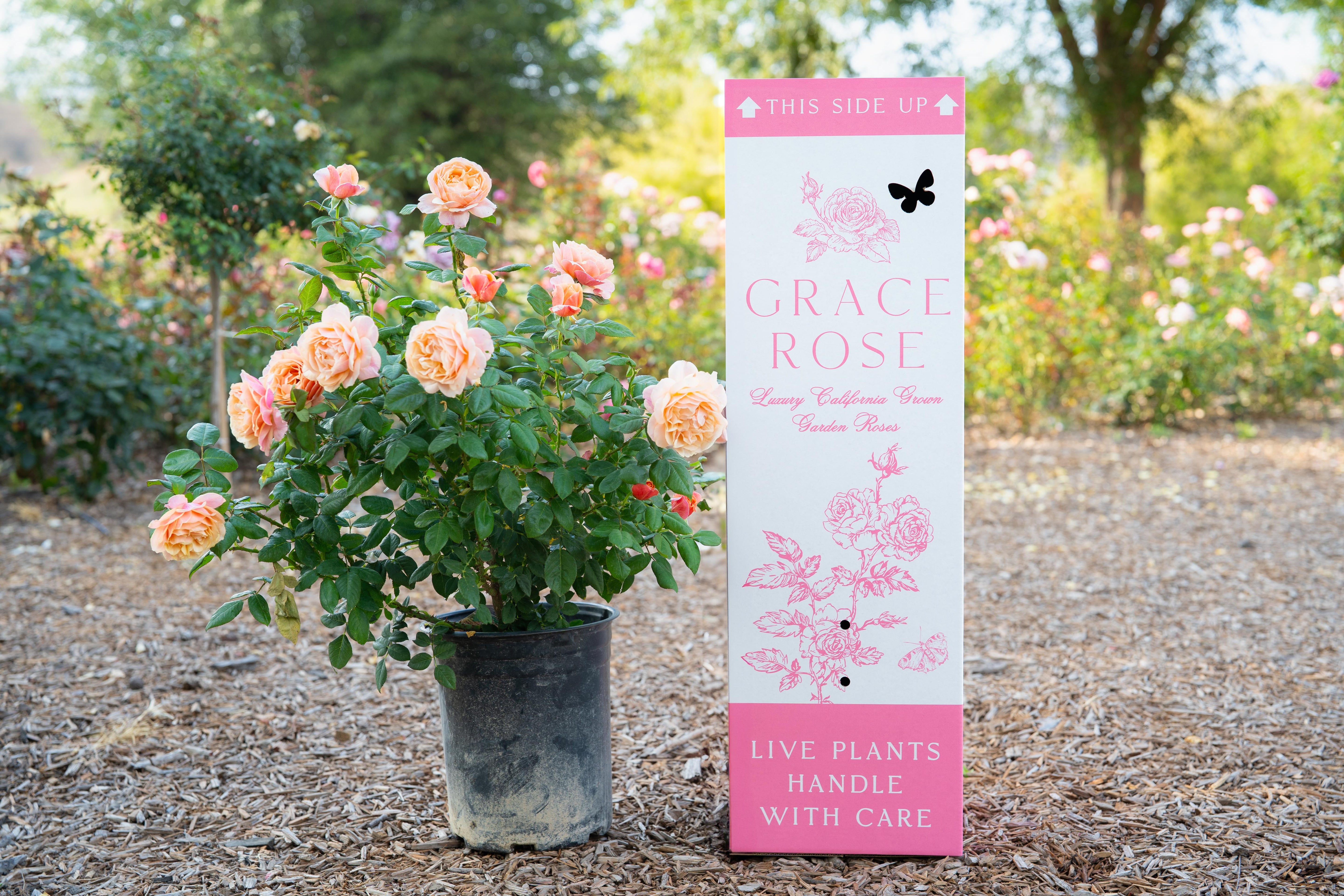
This is why larger, established potted roses like our Estate Roses™ have a distinct advantage in the fall: their mature root systems can reach the warmer soil layers that sustain life longer. As a result, they can be planted later than small potted roses with only 6" or less of root mass, effectively extending your planting season by two to three weeks. Estate Roses™ have a 10" wide and 12" deep root ball ensuring your roots can reach warmer soil and continue forming new roots much longer into fall and early winter.
💧 Watering and Mulching: The Final Step for Success
- Water deeply — saturate the soil to a depth of 12 inches for Estate Roses™ immediately after planting. This eliminates air pockets and ensures roots make firm contact with surrounding soil.
- Maintain consistent moisture during the first several weeks, even if fall rains arrive. Dry pockets can interrupt root growth and reduce cold tolerance.
- Apply 2–4 inches of mulch around the base (but not directly against canes). Mulch insulates the soil, retains warmth, and buffers against freeze-thaw cycles. Organic materials such as shredded bark, composted leaves, or straw are ideal.
Proper mulching can keep soil temperatures 5–10°F warmer through winter — the difference between root dormancy and root damage.
🌹 Best Practices for Fall Planting
| Step | Key Tip |
|---|---|
| Site Selection | Full sun (6+ hours/day) and good air flow reduce disease pressure. |
| Soil Prep | Amend with compost for drainage and nutrition; pH ~6.5. |
| Planting Depth | Place the bud union of budded roses or crown of own root roses 2" below soil line |
| Watering | Deep soak at planting; maintain moisture through dormancy. |
| Mulch | Apply 2–4" organic mulch to insulate and conserve warmth. |
| Pruning | Avoid pruning in fall; wait until late winter or early spring. |
🕰 In Summary
- Plant 6 weeks before your region’s first hard freeze (≤ 28°F).
- Warm soil + cool air = ideal root development.
- Larger potted roses like our Estate Roses™ can extend your planting window due to deeper heat retention.
- Water thoroughly & mulch immediately to preserve soil warmth and moisture.
🌸 The Grace Rose Farm Way
Fall planting isn’t just about timing — it’s about giving your roses a graceful beginning. When the soil is still warm and the air cool, nature aligns perfectly to root your garden in strength. Plant this season, and come spring, your roses will thank you — bursting with early blooms, lush foliage, and the unmistakable fragrance of living luxury in bloom.
Happy Planting!
Heidi
© Grace Rose Farm. All rights reserved.