



































Westcountry™ Lupines — The Crown Jewels of the Cottage Garden
Couture color. Towering spires. Pollinator magic. Here’s why these legendary lupines deserve a starring role in your spring garden.
Few flowers stop gardeners mid-scroll the way Westcountry™ Lupines do. With tall spires packed in velvety, saturated color — from midnight blues to molten reds and luminous bicolors — these lupines feel less like perennials and more like living stained glass. They bring drama, movement, and old-world romance to borders, meadows, and rose gardens alike.
The Story Behind Westcountry™ Lupines
Westcountry™ Lupines trace their roots to Devon, England, a region known as “The West Country” — famous for rolling green hills, historic gardens, and a deep heritage of plant breeding. They were developed by Keith Hammett, one of the world’s most respected lupine breeders, who began refining lupines in the 1990s with a clear goal: create plants that bloom like luxury garden staples — strong, upright, richly colored, and consistent.
Why Westcountry™ Lupines Are So Special
Many lupines grown from seed can be genetically unpredictable, which is why bicolors often “wash out” or revert over time. Westcountry™ Lupines are grown to preserve their signature look — giving you the dramatic flame effects and jewel tones you fell in love with.
💎 Color Like No Other
Think smoky charcoals, sunset reds, creamy yellows, violets, and high-contrast bicolors that read from across the garden.
🏛️ Architectural Spires
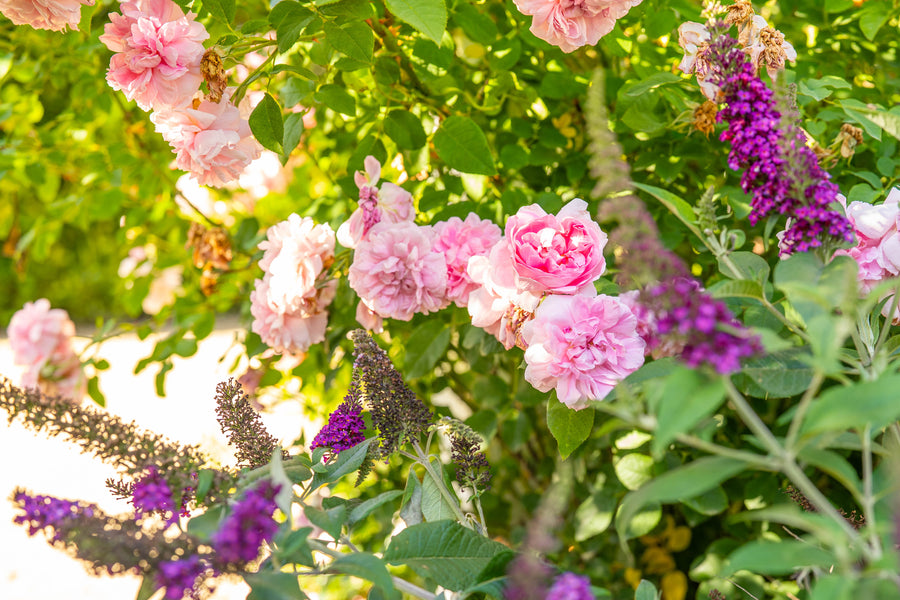
Tall, upright bloom spikes add vertical drama — perfect for weaving through roses, peonies, and cottage borders.
🐝 Pollinator Magnet
Bees adore lupines — and when those spires are in bloom, your garden feels alive in the very best way.
How to Grow Lupines Successfully
Lupines are wonderfully rewarding once you understand what they want: sun, drainage, and breathing room. Give them the right start, and they’ll reward you with towering spring color.
The Magic Happening Underground
Lupines are part of the legume family, which means they can support soil health in a special way. Through a relationship with soil microbes, lupines can help improve nitrogen availability in the garden — a lovely bonus when they’re planted in mixed borders. In a rose garden, they’re not just pretty… they’re purposeful.
Bloom Time, Deadheading & Rebloom
Westcountry™ Lupines typically bloom in late spring to early summer, often right alongside peonies and the first big flush of roses. For the longest show, deadhead spent flower spikes promptly. Many plants will respond with a later-season encore bloom, especially in milder climates.
Longevity & What to Expect
Lupines are often considered short-lived perennials (commonly 2–4 years), but the right conditions can extend their garden life. The biggest key is drainage — they’d rather be a little dry than even slightly soggy.
- Prioritize well-drained soil and avoid heavy clay pockets
- Give them airflow to reduce mildew and stress
- Avoid thick mulch piled at the crown
- Cut back after flowering and tidy in fall
Westcountry™ Lupines embody everything we love in a garden: romance, artistry, and that unmistakable feeling that something truly special is in bloom. When they rise through roses in late spring — tall, glowing, and humming with bees — the whole garden feels like a storybook.
Happy Gardening!
Heidi