
































Rose Care • Plant Health
Black Spot on Roses: The Biology, the Fix, and How to Keep It Gone
If you’ve grown roses for more than five minutes, you’ve probably met black spot. Let’s talk about what it is, why roses are susceptible, and exactly how I prevent and manage it in a real garden.
The Biology of Black Spot (and Why Roses Get It)
Black spot is caused by the fungal pathogen Diplocarpon rosae. It’s a true fungus, and it thrives when we give it three things: moisture, warmth, and susceptible leaf tissue.

Many older roses—especially traditional hybrid teas—were bred first for bloom form and fragrance. Disease resistance wasn’t always the priority. Modern breeding has changed everything, but the biology of black spot hasn’t.
How Infection Happens
Black spot spores need a long enough window of leaf wetness to germinate. If leaves stay wet for hours (think rainy spells, heavy dew, or overhead sprinklers), the fungus can establish and spread.
Black Spot Life Cycle (Simple + Practical)
- Overwintering: The fungus survives on fallen infected leaves and sometimes on canes.
- Spring splash: Rain and overhead watering move spores up onto fresh foliage.
- Germination: Spores germinate on wet leaves.
- Infection: The fungus enters and colonizes leaf tissue.
- Symptoms: Black lesions form; surrounding tissue yellows.
- Leaf drop: The plant defoliates, stressing growth and bloom production.
- Repeat: New spores spread the problem through the season.
Prevention: Variety Selection is Everything

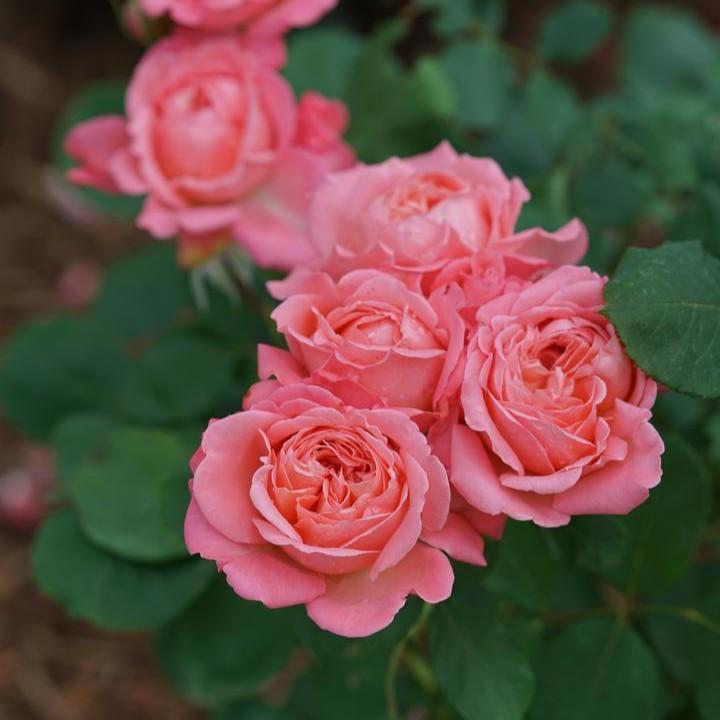
*Living the Dream™ - an exceptional new rose for 2026 from Weeks Roses
If you want a rose garden that feels joyful (not like a weekly fungicide job), start with varieties that were bred and trialed outdoors and proven to be resistant to black spot.
I’m always going to push this: choosing healthy genetics reduces pressure from day one. You can’t “out-spray” a chronically susceptible variety in a humid climate forever—but you can pick roses that want to live.
- Knock Out®

- Drift® Roses

- Brick House® Series

- Kolorscape® Series

- Tequila® Series

- Canyon Road™
- Cherry Frost™
- Fruity Petals™
- Gilded Sun™
- Highwire Flyer™
- Icecap™
- Peppermint Pop™
- Pinkerbelle™

- Pretty Polly® Series
- Raspberry Cupcake™

- Raspberry Rugostar®
- Sitting Pretty™
- Sunset Horizon™
- Sweet Mademoiselle™

- Sweet Spirit™
- Tahitian Treasure™
- Top Cream™

- Parfuma® Bliss™
- Fashion Forward™
- Living the Dream™
- Light Years Away™
- In Love Again™

- Easy Does It™
- Julia Child™
- Morning Glow™

- Time After Time™
- Belinda's Blush™

- Bonica
- Cosmic Clouds™
- Forever & Ever Pink™
- Easy on the Eyes™
- Home Run™
- In Your Eyes™
- Party Hardy™
- Pink Freedom™
- Sultry Night™
- Take it Easy™
- Top Gun™
- Watercolors® Home Run
- Easy Charmer
- Eustacia Vye®

- Emily Bronte®
- Princess Anne™
- Claire Austin®

- Malvern Hills®
- Olivia Rose Austin®
- Roald Dahl®
- The Lark Ascending®
- Susan William-Eliis®
- Tottering-By-Gently
- Mary Delany®
- The Mayflower®
- Scarborough Fair
- Silas Marner®
- The Country Parson®
- Penelope Lively
- Kew Gardens
Resistant doesn’t mean “never shows a spot”—it means the plant stays strong, holds leaves, and keeps blooming even when conditions aren’t perfect.
Control Options: Organic vs. Traditional
Once black spot appears, you can manage it with either organic-style programs or traditional fungicides. Both can work—your climate and your consistency usually decide which path feels best.
Organic options tend to work best preventatively and when applied consistently with great coverage. These are helpful tools when disease pressure is moderate and you’re committed to routine.
- Neem oil (use carefully—avoid heat of day)
- Copper fungicides (protectant; can help slow spread)
- Potassium bicarbonate (changes leaf surface conditions)
-
Biologicals (like Bacillus-based options)

Traditional fungicides can be extremely effective, especially when disease pressure is high or infection has already established. Rotating modes of action helps reduce resistance issues.
- Myclobutanil (systemic)
- Propiconazole (systemic)
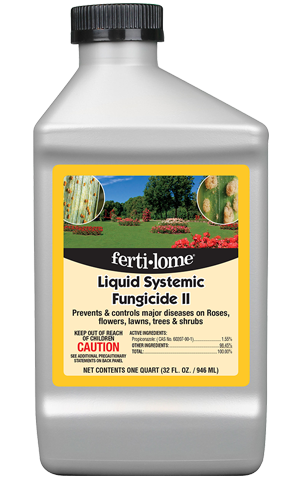
- Tebuconazole (systemic)
- Chlorothalonil (contact protectant)
- Trifloxystrobin (systemic/locally systemic)
Cultural Practices That Prevent and Improve Black Spot
This is the unglamorous part that makes the biggest difference. If you want fewer issues, focus on keeping leaves dry, improving airflow, and removing the “spore factories.”
- Water at the base (avoid overhead irrigation).
- Water in the morning so foliage dries quickly.
- Prune for airflow (open the center, remove crossing canes).
- Clean up fallen leaves and remove infected foliage promptly.
- Space plants properly so humidity doesn’t get trapped.
- Go easy on nitrogen—soft growth is more vulnerable.
- End-of-season sanitation: remove debris and refresh mulch if needed.
If you do nothing else, do these: clean up leaves, improve airflow, and stop wetting foliage. Those three changes alone can be a game changer.
A Black Spot–Free Rose Garden is Totally Possible
Black spot isn’t a personal failure—it’s biology. But with modern breeding, a preventative approach, and consistency, anyone can enjoy a black spot–free rose garden.
Happy Gardening,
Heidi 🌹