
































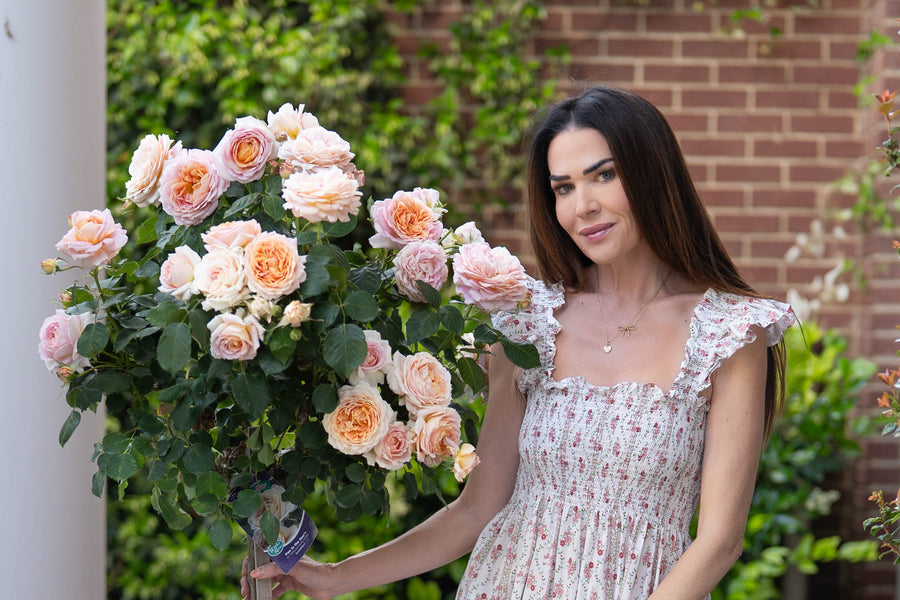
Delphine-Grace™

A Life Carefully Composed
In the gracious heart of New Orleans’ Garden District, where grand porches caught the evening light and wrought-iron fences framed lush courtyards, Delphine-Grace lived surrounded by refinement, privilege, and expectation. Her family belonged to one of the city’s most respected circles, and from her earliest years she had been taught that beauty, talent, and poise were not simply admired — they were required.
She was given piano lessons as a little girl, seated upright on polished benches beneath the watchful gaze of instructors and family friends. Her fingers learned scales, sonatas, and hymns. She learned to keep time, to sit beautifully, to perform without error. But though she played well, the music never quite felt like hers. It lived on the page and in the expectations of others, never in the deepest part of her heart.
Her mother believed music was part of becoming a proper young lady. Her father, too, hoped it would prepare her for the life they imagined for her — a life of admiration, security, and an excellent marriage.
“Delphine,” her mother would say, adjusting the fall of lace at her shoulder, “a cultivated woman must know how to move gracefully through the world. Music is part of that.”
And so Delphine practiced. She played what was placed before her. She smiled when asked. She accepted compliments she did not quite believe. Yet somewhere inside, she felt the loneliness of a song never fully sung.
She did not yet know that music would come alive for her not in the parlor, but in the streets.

Music in the Quarter
One evening, restless beneath the weight of her carefully arranged life, Delphine made her way beyond the stately homes and flowering walks of the Garden District and into the energy of Bourbon Street. There the city seemed to breathe differently — louder, freer, warmer. Gaslight shimmered. Laughter spilled from open doors. Music drifted into the night like something living.
That was where she first saw Julian Beaumont.
He was tall and lean, with gentle eyes, a handsome face, and the kind of easy dignity that made people look twice. His trombone gleamed beneath the streetlamps, but what struck Delphine most was not only the sound he made — rich, soulful, impossibly alive — but the kindness with which he carried himself. When he finished his set and noticed her standing nearby, he leaned toward a rose growing along a nearby garden fence, clipped it carefully, and placed it in her hand as though offering something sacred.
“A lady should never leave New Orleans without a melody,” he said with a smile, “and certainly not without a rose.”
Delphine laughed softly, surprised by how quickly she felt at ease.
Julian was a gentleman in every way that mattered. He opened doors, walked her home with care, and spoke to her with a respect that made her feel seen rather than managed. Their friendship began not with grand declarations, but with conversation — about music, books, gardens, dreams, and all the quiet things Delphine had never felt free to say aloud.
And for the first time in her life, music no longer felt like performance. It felt like possibility.

A Friendship in Bloom
Delphine and Julian became dear friends before they became anything more. He told her stories about learning music by ear, about the way a brass note could carry sorrow and joy in the same breath, and about how a true musician did not simply strike the right notes — he listened for what the music was trying to become.
Delphine told him how music had always felt like something assigned to her, never chosen. Julian understood at once.
“Then perhaps,” he said gently, “you have not yet been introduced to music in the right way.”
His words stayed with her.
Soon Delphine asked him if he would give her lessons — not the stiff, dutiful lessons of her childhood, but lessons that might help her understand what he heard in melody and rhythm. Julian agreed, and so he began visiting her family’s home, where he taught her not only technique, but feeling. He showed her how to breathe into a phrase, how to trust timing, how to let silence matter. Sometimes they sat at the piano. Sometimes he played his trombone in the garden while she listened.
At first her parents were uncertain about him. He was not the sort of young man they had imagined by their daughter’s side. But Julian’s kindness was impossible to ignore. He was respectful, patient, thoughtful, and sincere. They saw how Delphine changed in his presence — how she smiled more easily, carried herself more lightly, and seemed at last to become herself.
What began as friendship grew quietly, steadily, and beautifully — like a rose opening one petal at a time.

The Rose in the Garden
One afternoon, after a lesson that had left Delphine discouraged and close to tears, she slipped out into the family garden. She was tired of feeling inadequate, tired of wanting something she was not sure she could ever truly do. Julian followed her at a respectful distance and found her standing beside a rose bush unlike any she had ever seen.
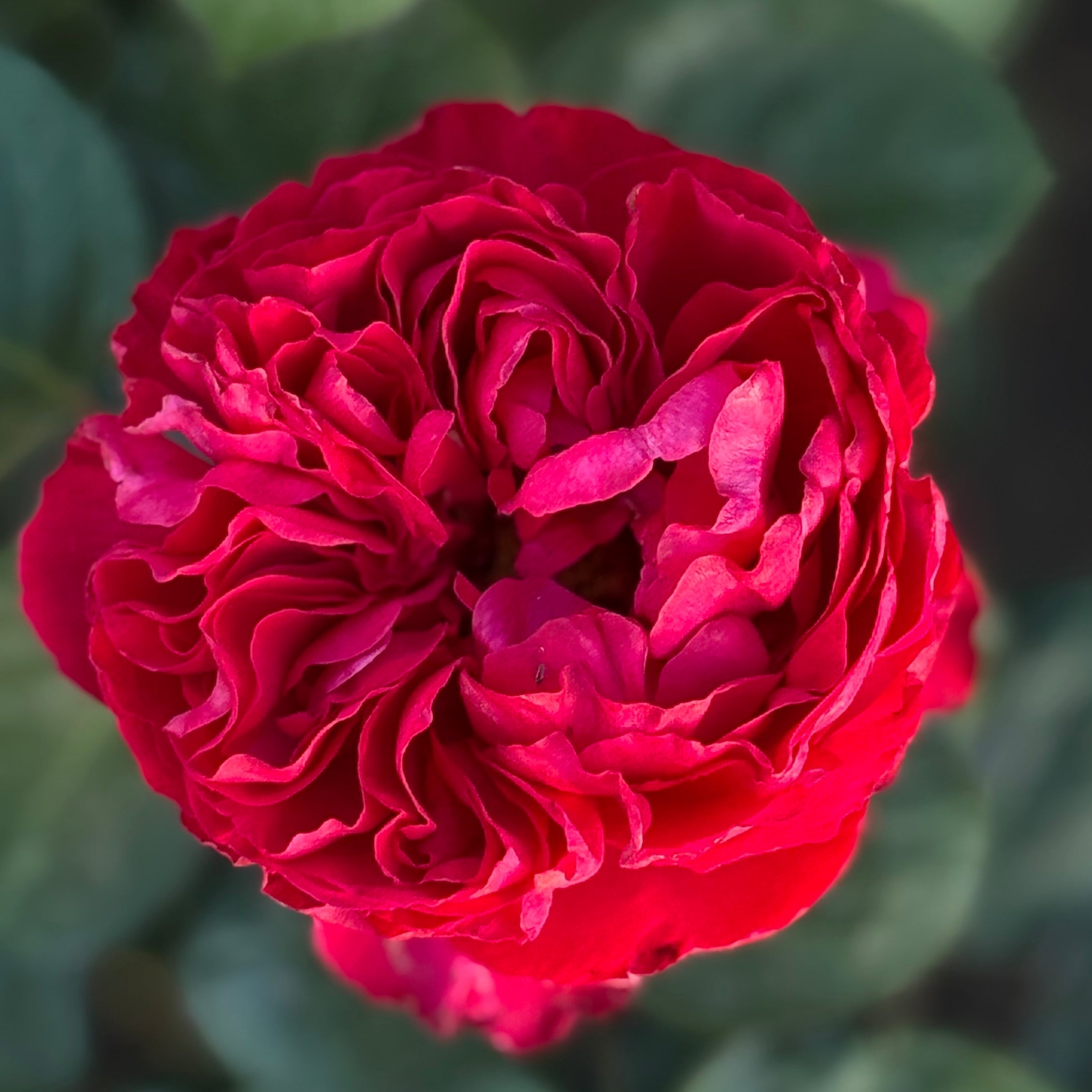
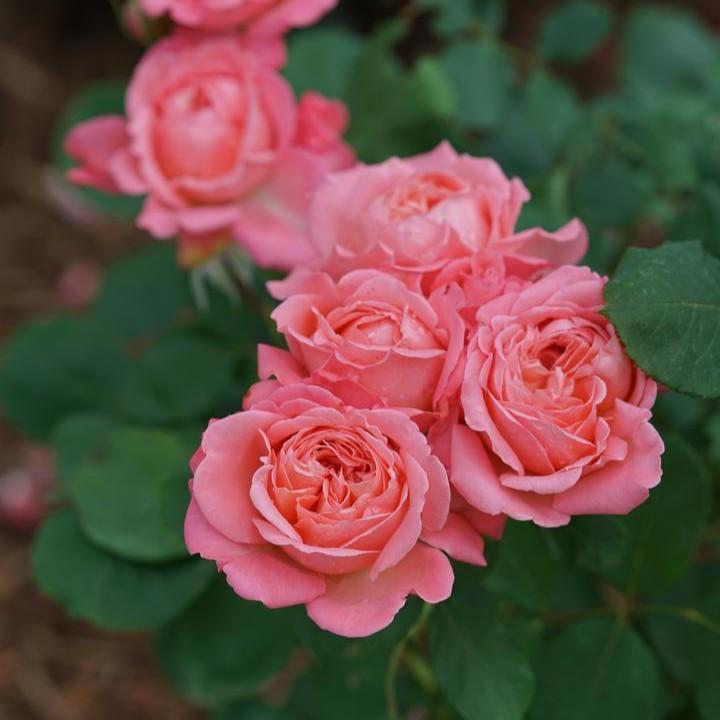
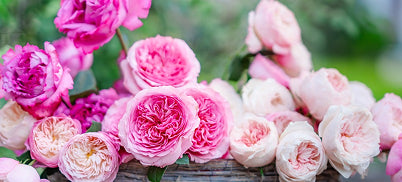
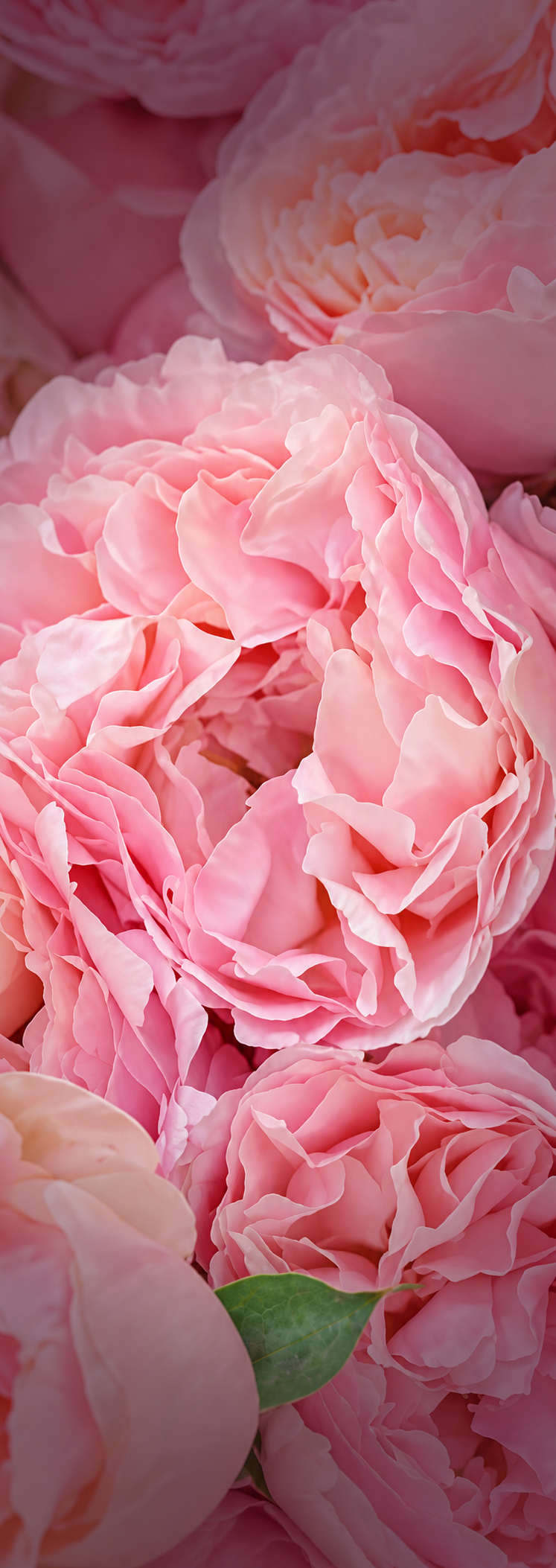
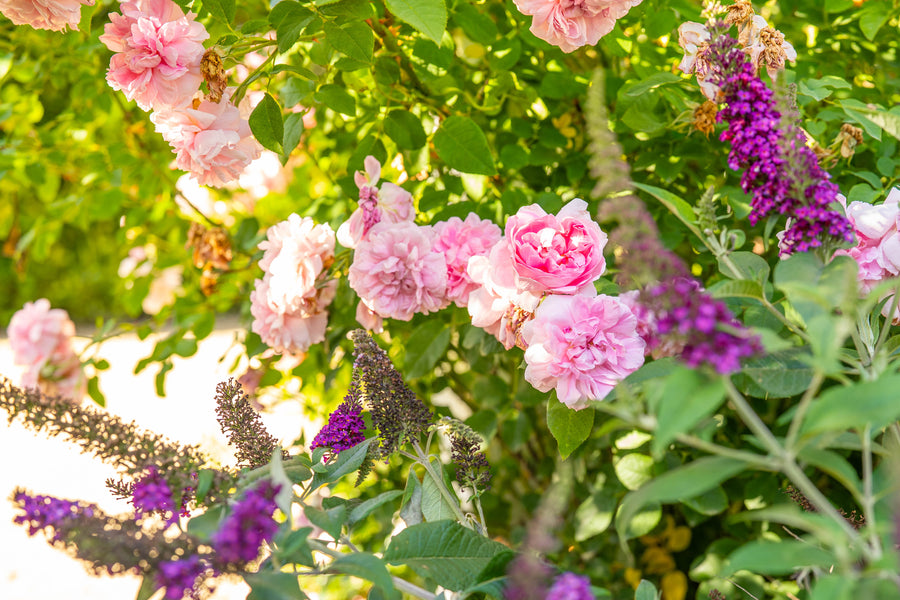
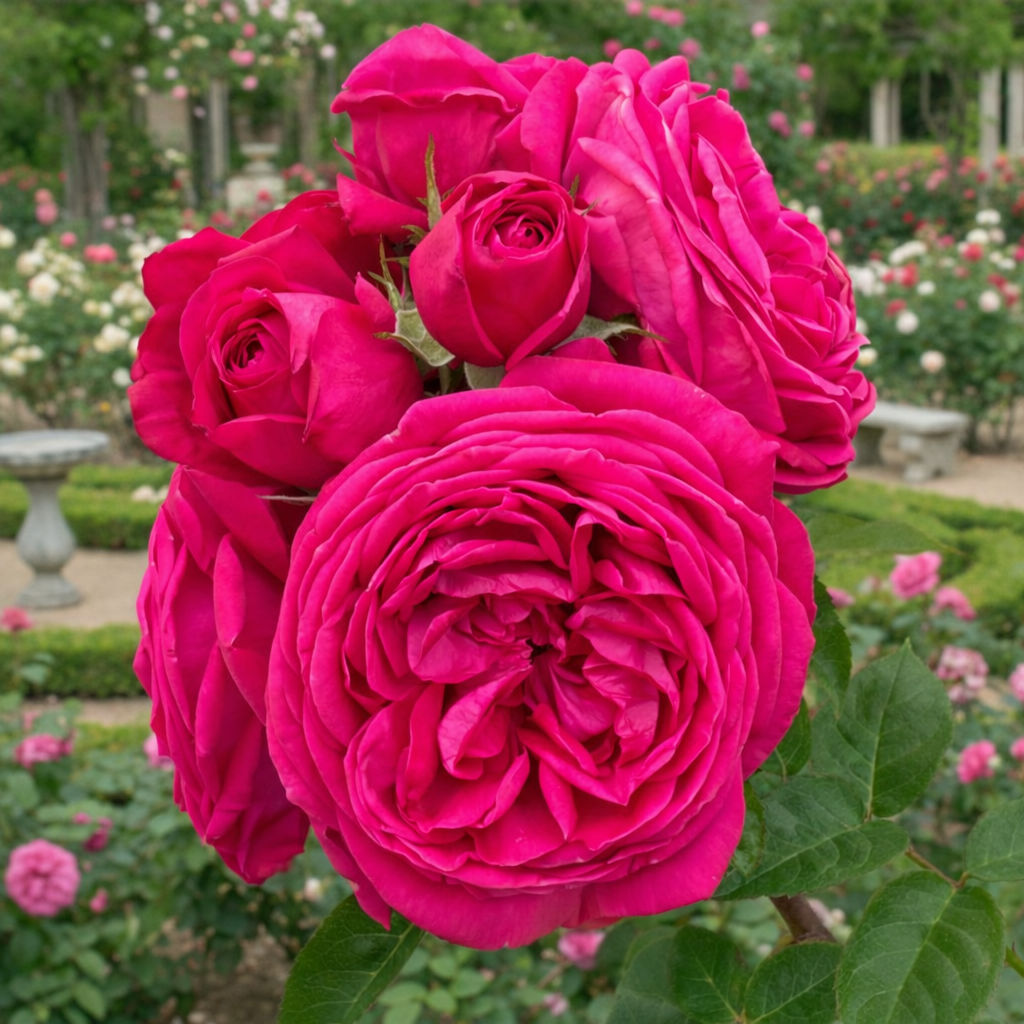
Its blooms were a deep, luminous magenta, richly quartered and full of old-fashioned romance. Each petal curved inward and outward in generous layers, creating a flower that seemed almost composed by hand. It was fragrant, velvety, and unforgettable — the sort of rose that made a person stop and linger.
Julian stood beside her and touched one bloom lightly.
“Music is like this rose,” he told her. “You cannot rush it open. You have to stay with it. Count the petals. Breathe it in. Let it teach you patience. Let it become familiar. A beautiful thing takes time, and what takes time often lasts the longest.”
Delphine looked at the bloom, then at him, and something within her settled. For the first time, she understood that music was not a test to pass, but something living — something cultivated. Something loved into being.
The rose became their quiet symbol. The more she practiced, the more confident she became. The more she listened, the more deeply she heard. And with every lesson, every walk, every shared moment in the garden, Delphine found herself falling not only in love with music, but with the man who had helped her hear it.
From then on, Julian brought her bouquets of those magenta roses from the gardens of New Orleans — armfuls of fragrance, color, and devotion. Her parents, once unsure, came to see what Delphine had seen from the beginning: that he was a good man, and that under his gentle encouragement their daughter had truly begun to bloom.

What Bloomed Thereafter
Delphine-Grace no longer played because she was expected to. She played because music had become a language of courage, tenderness, and truth. In every phrase she practiced, in every note she dared to shape as her own, there was a little more freedom.
And in every bouquet Julian carried through her family’s garden gate, there was a quiet promise — that beauty could grow where patience was given, that love could begin as friendship, and that the heart often knows its calling long before the world approves.
The magenta rose remained for Delphine what it had first become that day in the garden: a symbol of music learned slowly, of confidence cultivated gently, and of love that opened with grace rather than haste.
In time, the very thing that had once felt like obligation became joy. The young woman who had once sat dutifully at the piano became someone who understood that true artistry cannot be forced — it must be awakened.
And so Delphine-Grace™ came to represent a love story woven with melody, patience, friendship, and bloom — a rose for those who discover that the most beautiful lives are not merely arranged, but deeply, bravely cultivated.

and blooms most beautifully when nurtured with love.”